Downloadable PDF
Document Preview
Electricity Affordability and Household Income
Electricity tariffs remain one of the most debated issues in Nigeria’s power sector. Discussions often focus on whether tariffs should increase or remain frozen, but a more fundamental question is rarely examined directly:
How much of household income is required to pay for electricity
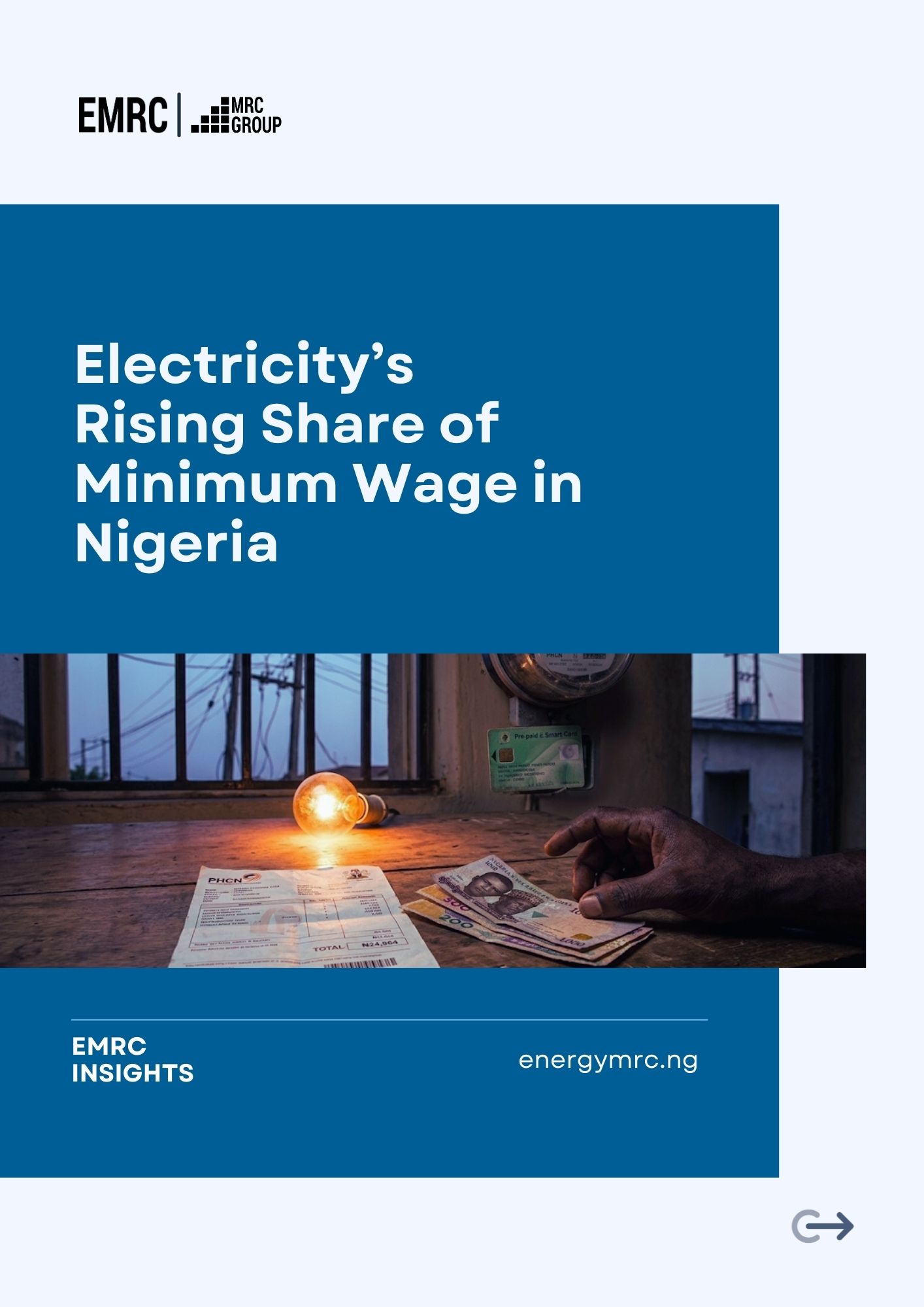
For low-income households, this question is critical. Electricity is not a discretionary expense. It is a basic service required for lighting, communication, cooling, and household productivity. When electricity costs consume a growing share of income, affordability pressures emerge even if nominal wages increase.
Examining electricity costs relative to income provides a clearer way to understand this challenge. One useful reference point is the national minimum wage, which represents the income floor for formal sector workers in Nigeria.
By analysing the share of minimum wage required to pay for electricity, it becomes possible to assess how affordability has evolved over time and whether electricity costs are rising faster than household incomes.